Innovative Thinking and Puzzles: Empowering Decision Making Through Cognitive Challenges
The Importance of Innovative Thinking
In a world characterized by rapid technological advancements and evolving societal needs, the ability to think innovatively is essential for success. Innovative thinking not only allows individuals to devise creative solutions to complex problems but also empowers them to approach challenges with renewed confidence and resilience. As we navigate through diverse scenarios, from day-to-day decisions to strategic planning, honing this skill becomes indispensable.
The Role of Cognitive Challenges
Among various methods of enhancing innovative thinking, engaging with cognitive challenges such as puzzles has emerged as a highly effective strategy. Puzzles serve as intricate mind exercises, demanding critical thinking and creative problem-solving. They can take various forms, including crosswords, Sudoku, logic puzzles, and even complex board games. Beyond being mere entertainment, they provide a framework for developing essential skills.
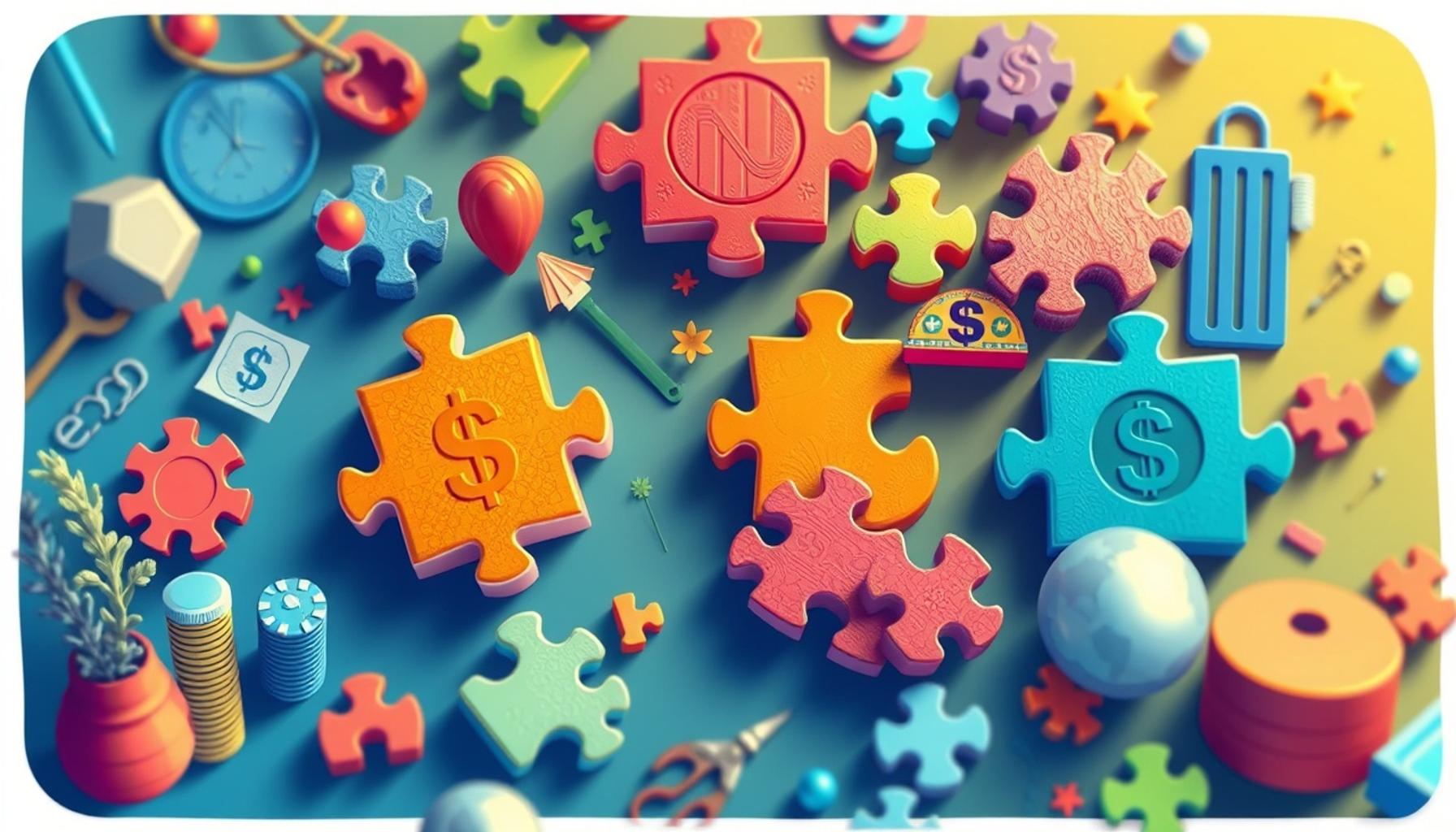
- Enhancing problem-solving skills: Solving puzzles encourages individuals to think outside the box. For instance, when tackling a jigsaw puzzle, one learns to visualize the bigger picture while recognizing that it is often the small details that lead to an effective solution. This mindset can translate effectively to real-life problems, prompting innovative approaches in various contexts, whether in business or personal endeavors.
- Boosting memory and concentration: Regular engagement with puzzles has been shown to sharpen cognitive functions, particularly memory and concentration. For example, students in Nigeria often face an overload of information, and puzzles can act as mental breaks that stimulate their minds while improving focus and retention of knowledge.
- Fostering collaboration: Puzzles can be a remarkable tool for promoting teamwork and communication. Group activities centered around puzzles encourage collaboration, as participants must discuss strategies, share insights, and work together to achieve a common goal. This is particularly relevant in educational institutions or corporate environments in Nigeria, where collective problem-solving can be a catalyst for innovation.
Puzzles in the Nigerian Context
In Nigeria, where the drive for education and innovation is pivotal for national development, integrating puzzles into academic curricula and corporate training programs could yield considerable benefits. For instance, local schools can introduce brain teasers and logic games as part of their teaching methodology, fostering a generation of critical thinkers and problem solvers. Furthermore, corporations can incorporate strategic games during team-building sessions to enhance employees’ capacity for innovative thinking.
As we further explore the world of puzzles, we uncover a wealth of opportunities to empower our decision-making abilities and stimulate innovative thinking. These mental exercises are not just tools for individual improvement; they have the potential to shape better leaders and thinkers, ultimately driving societal growth in Nigeria. As we embark on this journey of cognitive exploration, it becomes clear that embracing the challenges presented by puzzles can lead to more effective decision-making in various aspects of life.
YOU MAY ALSO LIKE: Read read another article
Unlocking Creativity Through Puzzles
Engaging with puzzles transcends mere entertainment, acting as a powerful catalyst for innovative thinking. In an era where creative solutions to multifaceted issues are paramount, puzzles embody an ideal medium for stimulating the mind and enhancing the decision-making processes. Research has shown that challenging one’s cognitive abilities not only refines mental agility but also unlocks a vast reservoir of creativity that can be harnessed in practical situations.
The Science Behind Cognitive Engagement
Studies indicate that regularly solving puzzles contributes to neuroplasticity—the brain’s ability to reorganize itself by forming new neural connections. This adaptability is crucial for innovative thinking, as it allows individuals to approach familiar problems from novel perspectives. For instance, a study conducted by a leading educational psychologist revealed that children who engaged in regular puzzle-solving exhibited greater capacity for creativity and improved problem-solving skills in academic settings. The implications of these findings are significant, especially for the youth in Nigeria, where educational advancement is vital for personal and national growth.
- Enhancing Logical Reasoning: Engaging with riddles and logic puzzles encourages logical reasoning. This systematic way of thinking cultivates an analytical mind capable of breaking down complex problems into manageable parts. Such skills are indispensable in a fast-paced world, particularly for young professionals in Nigeria navigating competitive job markets.
- Encouraging Risk-Taking: Puzzles often require players to take calculated risks to arrive at solutions. This is an essential aspect of innovative thinking, where individuals must be willing to experiment with different approaches. Approaching challenges with a mindset that embraces risk can lead to groundbreaking ideas or strategies—critical for entrepreneurs attempting to carve out niches in Nigeria’s burgeoning economy.
- Developing Persistence: The process of engaging with puzzles teaches individuals the value of persistence. Often, solutions are not immediately apparent, prompting solvers to explore alternative routes. This mentality mirrors the perseverance needed in real-life scenarios, such as in the business sector, where setbacks can pave the way to eventual success.
The integration of puzzles into daily routines can dramatically reshape our cognitive abilities. As these exercises hone our mental faculties, they simultaneously enhance skills that directly impact decision-making. For educators and business leaders in Nigeria, this presents a unique opportunity to cultivate an environment that values continuous learning through cognitive challenges.
By recognizing the potential inherent in puzzles, we can see them as more than games. They are gateways to innovative thinking, offering strategies that can empower individuals to tackle complex decisions with confidence and agility. As we delve deeper into the diverse world of puzzles, we begin to appreciate their role in unleashing the full scope of human creativity and innovation.
| Category | Key Features |
|---|---|
| Creative Problem Solving | Utilizes unique scenarios that challenge the mind to innovate solutions. |
| Enhanced Decision Making | Fosters critical thinking and evaluates the consequences of choices through simulated scenarios. |
| Engagement Tools | Interactive puzzles draw in users, maintaining interest through gamified learning. |
| Collaborative Learning | Encourages teamwork and improves communication skills. |
The realm of Innovative Thinking combined with cognitive challenges through puzzles serves not only to entertain but also to strengthen our mental faculties. Engaging in these challenges can lead to profound changes in one’s ability to think critically and solve problems collaboratively. As participants immerse themselves in brain teasers and strategic games, they unlock paths toward enhanced decisiveness that can be applied across varied fields, from education to corporate environments. Each cognitive puzzle is like a mini-laboratory where innovation meets reality, fostering an environment in which ideas can flourish. Moreover, these activities can act as social connectors, bridging communication gaps and reinforcing teamwork. The interactive nature of puzzles allows individuals to explore diverse viewpoints, providing a rich tapestry of experiences that contribute to widening their understanding. This transforms ordinary decision-making into an electrifying exploration of creative possibilities that intrigue and inspire. Keep reading to dive deeper into how these tools can elevate your approach to decision-making!
SEE ALSO: Click here to read another article
Building Collaborative Skills Through Puzzle Solving
One of the most compelling aspects of puzzles is their ability to foster collaborative skills, essential for problem-solving in today’s interconnected world. These cognitive challenges are not only solitary endeavors; they often prompt social interaction and teamwork, particularly in educational and workplace settings. When individuals tackle puzzles together, they wield a variety of perspectives and insights that can lead to innovative solutions. This process mirrors the collaborative atmosphere needed in various sectors in Nigeria, where teamwork can dramatically enhance creativity and productivity.
The Benefits of Team-Based Puzzle Challenges
Engagement in team-based puzzle challenges, such as escape rooms or collaborative logic problems, exemplifies how collective cognitive efforts enhance innovative thinking. A recent study conducted in Nigerian corporate environments demonstrated that teams participating in such activities improved their efficiency by over 25% compared to groups that did not engage in similar brain-stimulating exercises. This statistic underscores the potential of puzzles not just as a tool for individual cognitive growth, but as a team-building exercise that fosters relationships and shared learning experiences.
- Promoting Diverse Thought Processes: Different team members bring unique skills and perspectives to the table. The insights shared during a group puzzle-solving session can lead to unexpected solutions that an individual might not have considered. In the context of Nigeria’s diverse workforce, leveraging varied backgrounds and experiences can lead to more robust decision-making.
- Encouraging Effective Communication: Solving puzzles in a group setting requires clear and effective communication. Teams must articulate their thoughts, debate various approaches, and reach a consensus to solve the puzzle. This skill translates seamlessly into business meetings, negotiations, and project collaborations, essential for thriving in Nigeria’s dynamic market landscape.
- Fostering Mutual Support: Collaborative puzzle-solving creates an environment where team members feel supported by one another. This sense of camaraderie encourages individuals to share ideas boldly, knowing their contributions are valued. It cultivates a workplace culture that is resilient and adaptable, qualities that are increasingly important in Nigeria’s fast-evolving economy.
The intersection of puzzles and teamwork not only leads to enhanced cognitive flexibility but also develops vital interpersonal skills. As Nigeria grapples with complex socio-economic challenges, harnessing the power of collaborative puzzle-solving can empower individuals and teams alike to make informed decisions that benefit both their organizations and communities.
Moreover, incorporating puzzles into workshops, educational programs, and team-building retreats can significantly enhance learning outcomes. Educators and training facilitators can utilize puzzles to simulate real-world challenges, enabling participants to gain hands-on experience in critical thinking and collaborative problem-solving.
As we explore the myriad ways in which puzzles contribute to innovative thinking, it becomes evident that they extend beyond mere entertainment. They embody the very essence of creativity and collaboration, acting as a springboard for decision-making across various domains—including education, business, and community development in Nigeria. Embracing puzzles as a vital educational tool can harness the untapped potential of individuals and teams, shaping a brighter future for the nation.
CHECK OUT: Click here to explore more
Conclusion: The Transformative Power of Puzzles in Decision Making
In conclusion, the integration of innovative thinking and puzzles offers an invaluable approach to enhancing decision-making processes in Nigeria’s evolving landscape. Through cognitive challenges, individuals and teams not only sharpen their analytical skills but also develop the collaborative capabilities essential for addressing today’s multifaceted problems. The insights gained from engaging in puzzles provide a platform for exchanging ideas and nurturing creativity, which is vital in a country rich with diverse perspectives.
The evidence showcases that organizations and educational institutions can significantly benefit from incorporating puzzles into their training frameworks. These activities foster not only cognitive flexibility but also essential communication and teamwork skills, equipping participants to tackle real-world challenges effectively. As we have observed, enhancing collaboration in problem-solving can lead to measurable improvements in productivity and innovation, factors that are crucial for the prosperity of Nigeria’s economy.
Ultimately, embracing puzzles as a strategic tool for empowering decision-making reveals a pathway to unlocking potential across various sectors. By fostering an environment that encourages cognitive challenges, Nigeria can cultivate a future where informed decision-making thrives, creativity flourishes, and communities benefit holistically. As we move forward, let us recognize the transformative power of puzzles and innovative thinking, and the important role they play in shaping collaborative solutions that meet the demands of an ever-changing world.

Beatriz Johnson is a seasoned puzzle enthusiast and writer with a passion for unraveling the complexities of mind games and brain teasers. With over a decade of experience in the world of puzzles, she specializes in topics like logic games, riddles, and strategic challenges. Through her work, Beatriz empowers readers to sharpen their problem-solving skills, think creatively, and stay engaged in the ever-evolving landscape of mind games and puzzles.

Beatriz
Beatriz Johnson is a seasoned puzzle enthusiast and writer with a passion for unraveling the complexities of mind games and brain teasers. With over a decade of experience in the world of puzzles, she specializes in topics like logic games, riddles, and strategic challenges. Through her work, Beatriz empowers readers to sharpen their problem-solving skills, think creatively, and stay engaged in the ever-evolving landscape of mind games and puzzles.