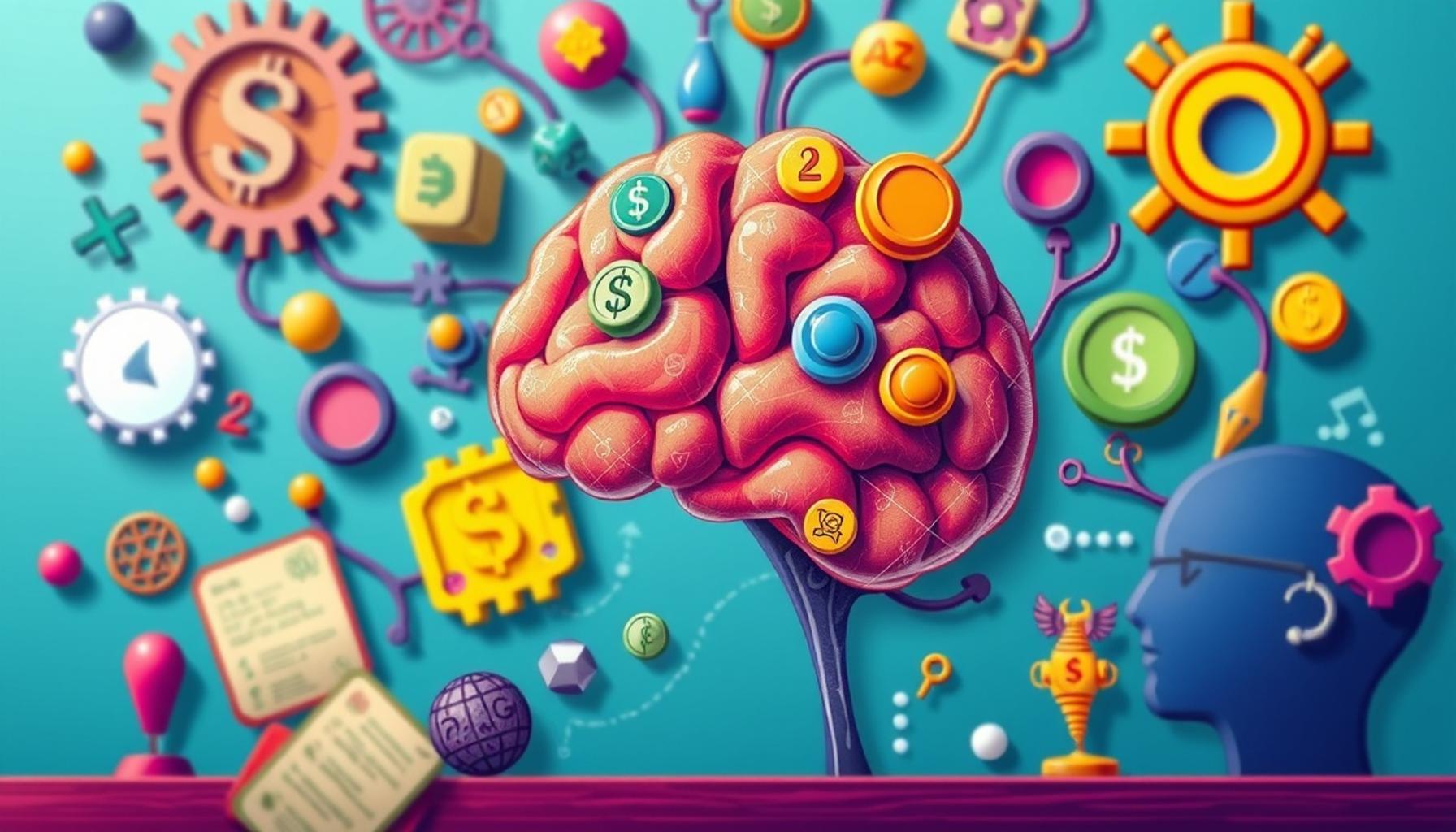
Developing Problem-Solving Skills: How Logic Games Enhance Critical Thinking and Creativity

Unleashing the Power of Logic Games
In today’s fast-paced world, problem-solving skills are essential for success in both personal and professional arenas. These skills foster critical thinking and spark creativity, allowing individuals to navigate complex challenges efficiently. One of the most engaging ways to enhance these abilities is through logic games.
Why Logic Games?
Logic games provide a playful yet effective platform for skill development, offering numerous benefits that cater to different learning styles. Some key advantages include:
- Improved Analytical Thinking: Players dissect problems into smaller parts for better understanding. For example, popular games like Sudoku require players to think critically about number placement, forcing them to assess various possibilities and eliminate incorrect ones.
- Enhanced Creativity: They encourage innovative approaches to finding solutions. Games such as chess not only promote strategic thinking but also inspire players to explore unconventional moves, pushing the boundaries of their creative thought processes.
- Increased Patience: Overcoming challenges fosters persistence and resilience. Engaging in logic puzzles like crosswords or riddles teaches individuals the value of patience, helping them develop a mindset that is better equipped to tackle real-life obstacles.
In Nigeria, the availability of diverse puzzles and games—from traditional board games to modern digital apps—makes it easy for individuals to engage in mental exercises. For example, classic Nigerian board games like Ludo and Ayo (also known as Oware) have long been enjoyed across generations, promoting not only critical thinking but also social interaction among family and friends. In recent years, the emergence of apps like Scrabble GO and Brain Games on mobile devices has made it more convenient for users to sharpen their cognitive skills anytime, anywhere.
Engage and Excel
Whether through solo activities or group challenges, integrating logic games into your routine can lead to measurable improvements in problem-solving skills. Studies show that individuals who regularly participate in such games demonstrate higher levels of cognitive flexibility and mental agility. By embracing these tools, individuals can unlock their potential, paving the way for extraordinary achievements in academics and beyond.
Furthermore, engaging in logic games can cultivate a sense of community. Consider organizing local tournaments featuring both modern and traditional games, where players can showcase their skills, share strategies, and learn from each other. This not only enriches personal development but also strengthens social connections in the community.
Ultimately, the journey into the world of logic games is not merely about entertainment; it is a vital investment in personal growth and intellectual enrichment. So, embark on this adventure today and watch as your skills evolve, opening doors to new opportunities.
LEARN MORE: This related article may interest you
Unlocking Cognitive Potential Through Engagement
The transformative power of logic games goes beyond mere entertainment; it serves as a dynamic method to enhance problem-solving skills while simultaneously sharpening critical thinking and creativity. When individuals immerse themselves in these games, they experience a unique blend of challenge and enjoyment that stimulates the mind and encourages innovative thinking. As players delve into various scenarios, they learn to approach problems with a strategic mindset, enabling them to devise effective solutions in an increasingly complex world.
Boosting Cognitive Skills with Structured Play
Logic games offer a structured framework that fosters cognitive development through engaging activities. As players confront puzzles and strategic challenges, they enhance essential skills that are vital for both everyday problem-solving and broader intellectual pursuits. The following are key cognitive skills that benefit from regular engagement with logic games:
- Critical Analysis: Games that require players to assess different outcomes forge the ability to think critically. For instance, solving a mystery in a detective-themed game requires players to evaluate clues carefully, honing their analytical skills.
- Creative Problem-Solving: Many logic games involve scenarios that require out-of-the-box thinking. Games like “ThinkFun’s Rush Hour” challenge players to navigate obstacles creatively, developing their ability to think innovatively when faced with constraints.
- Decision Making: Participating in strategic games like chess not only sharpens players’ tactical skills but also equips them to make informed decisions under pressure, a crucial skill applicable to various life situations.
- Logical Reasoning: Playing games like “Mastermind” or “Zendo” enhances players’ ability to reason through a series of logical steps, laying the groundwork for stronger reasoning in academic and professional environments.
Moreover, the adaptability of logic games makes them accessible and relatable in the Nigerian context. Local adaptations of famous games, such as a uniquely Nigerian version of chess or collective Ludo sessions after a long day, allow for cultural engagement paired with skill-building. This element of familiarity not only aids in learning but also fosters social bonding among players, creating a community that values intellectual growth.
Practical Applications of Logic Games
The practical applications of skills honed through logic games are vast. For students, these enhanced abilities can lead to improved performance in academic settings through better problem-solving strategies and innovative thinking. Similarly, professionals can leverage these newfound skills to tackle workplace challenges more effectively, leading to enhanced productivity and job satisfaction.
In addition, incorporating logic games into educational curricula can assist educators in fostering a rich learning environment. Schools can introduce logic competitions or puzzle days where students can work collaboratively or individually to overcome challenges, thereby cultivating critical thinking from an early age. This trend aligns well with the National Policy on Education, which emphasizes the importance of developing critical thinking as part of the learning objectives.
Overall, the journey of enhancing problem-solving skills through logic games is not just about mental exercise; it’s about nurturing a generation of critical thinkers and creative problem solvers who are prepared for the challenges of the future.
| Category | Insights |
|---|---|
| Cognitive Development | Engagement in logic games actively enhances cognitive skills such as pattern recognition and hypothesis testing. |
| Creativity Boost | Players are encouraged to devise unique strategies, thereby cultivating innovative thinking and creative problem-solving abilities. |
Logic games have garnered attention for their potential to significantly enhance problem-solving skills. They not only promote critical thinking but are also a fun and engaging method for individuals of all ages. As players navigate through various challenges, they learn to analyze situations, anticipate consequences, and adapt their strategies in real-time. This type of immersive play is foundational for developing a mindset geared towards solution-oriented approaches.Moreover, by incorporating elements of logic and reasoning, these games encourage decisive action, urging participants to make quick yet informed choices. In a world saturated with information, being able to sift through data and extract actionable insights is a critical skill. The repetitive nature of these games strengthens neural pathways associated with logic, paving the way for improved analytical skills in real-life scenarios.Finally, the collaborative aspect of many logic games introduces social dynamics that are just as crucial as individual skills. Team-based challenges foster communication and teamwork, vital components in both educational and professional environments. Here, players learn to negotiate, persuade, and work collectively towards a common objective, showcasing just how effective logic games can be in preparing individuals for complex problem-solving tasks in everyday life.
LEARN MORE: This related article may interest you
Expanding Horizons: The Role of Collaboration in Logic Games
One of the remarkable aspects of logic games is their ability to promote teamwork and collaborative problem-solving. While individual gameplay sharpens personal critical thinking skills, engaging in logic games with others can amplify these benefits exponentially. Cooperative formats encourage players to share perspectives, brainstorm solutions, and confront challenges collectively, which nurtures an environment rich in synergy.
Social Interaction and Its Cognitive Benefits
When players collaborate, they often encounter diverse problem-solving approaches that they might not have considered independently. This social interaction plays a vital role in developing creative problem-solving skills and enhances the overall cognitive experience. For instance, local board game cafés in Nigeria—such as those found in cities like Lagos and Abuja—often host logic game nights where individuals gather to tackle challenging puzzles and engage in strategic gameplay. This not only revitalizes communal ties but also creates a platform for learning from each other.
Research indicates that discussing solutions and navigating through challenges as a group can lead to deeper understanding and retention of learned skills. This phenomenon is especially pertinent in Nigerian settings where traditional communal approaches to learning and problem-solving have long been valued. Through shared experiences in logic games, players can cultivate a communal sense of victory, enhancing motivation and fostering a culture of continuous learning.
Real-World Application: Bridging the Gap Between Theory and Practice
The integration of logic games into various sectors, such as education and corporate training, showcases their practical applicability. In educational environments, universities and secondary schools in Nigeria can adopt logic games as part of their curriculum to encourage active learning. For example, schools can implement logic-based challenges during science fairs or inter-school competitions, provoking students to think critically while applying theoretical knowledge to real-life situations.
In the corporate world, workshops that incorporate logic games can enhance team dynamics and improve employee engagement. Organizations can host logic game sessions to address real workplace issues, encouraging employees to devise innovative strategies for problem resolution. This method not only sharpens critical thinking skills but also empowers teams to approach their work with newfound creativity and confidence.
A Global Perspective: Learning from International Practices
Examining global trends further reveals the potential of logic games in enhancing critical thinking and creativity. Countries like Finland have adopted gamified learning strategies within their educational frameworks, resulting in improved academic performance. Nigerian educators and policymakers can draw inspiration from such international models, adapting them to local contexts. By developing specific frameworks for implementing logic games across varied educational levels, it is possible to establish a standardized approach that places a high value on cognitive skill development.
As the world continues to evolve rapidly, it becomes increasingly essential for individuals to enhance their problem-solving skills. Logic games present a proven avenue to foster critical thinking and creativity, serving as bridges between abstract concepts and real-world challenges. By embracing these cognitive tools, Nigeria stands to cultivate a generation equipped to innovate and navigate the complexities of modern society.
RECOMMENDED: Check out this similar article
Conclusion: Unlocking Potential Through Logic Games
In summary, the integration of logic games into personal and educational pursuits can significantly enhance problem-solving skills, critical thinking, and creativity. The unique blend of individual engagement and collaborative interaction fosters a well-rounded cognitive development experience. As we have explored, logic games not only provide challenging puzzles to navigate but also open avenues for teamwork and diverse perspectives, which are invaluable in both academic and professional settings.
Moreover, the adaptability of logic games allows them to be seamlessly incorporated into various environments, from classrooms to corporate offices, empowering individuals to translate theoretical knowledge into practical solutions. This dual application strengthens both personal capabilities and collective dynamics, crucial in today’s fast-paced world. By embracing these interactive tools, Nigeria can cultivate a culture that prioritizes critical thinking and innovation, equipping the next generation with the skills necessary to tackle modern challenges.
As we move toward a more interconnected global landscape, it is essential to draw inspiration from international practices that have successfully harnessed the power of gamification. Educational and organizational leaders in Nigeria are encouraged to pioneer frameworks that make logic games a staple in their curriculums and training programs. By doing so, they not only enhance cognitive skill development but also inspire a movement that celebrates creativity, collaboration, and critical understanding.
The journey of enhancing problem-solving skills through logic games is just the beginning. As we continue to explore and implement these methods, we unlock the potential for profound transformation, inspiring innovative thinkers who can contribute meaningfully to their communities and beyond.

Beatriz Johnson is a seasoned puzzle enthusiast and writer with a passion for unraveling the complexities of mind games and brain teasers. With over a decade of experience in the world of puzzles, she specializes in topics like logic games, riddles, and strategic challenges. Through her work, Beatriz empowers readers to sharpen their problem-solving skills, think creatively, and stay engaged in the ever-evolving landscape of mind games and puzzles.

Beatriz
Beatriz Johnson is a seasoned puzzle enthusiast and writer with a passion for unraveling the complexities of mind games and brain teasers. With over a decade of experience in the world of puzzles, she specializes in topics like logic games, riddles, and strategic challenges. Through her work, Beatriz empowers readers to sharpen their problem-solving skills, think creatively, and stay engaged in the ever-evolving landscape of mind games and puzzles.